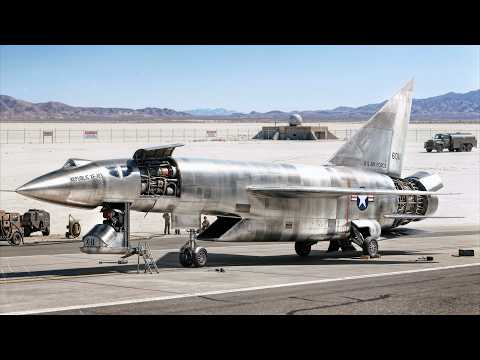
Why didn’t everyone want this “U Wing” plane that was so difficult to crash? 19:33 long video.
By RexResearch:The idea of the channel wing predates most of those reading this. It all began in the 1920s, when Willard Custer took shelter in a barn during a near-hurricane velocity storm. Much to his surprise and fascination, the barn roof suddenly lifted off and soared through the air. He wondered why an airplane had to gather speed on a runway, while a barn roof, a poor airfoil by any reckoning, could fly from a standing start. He soon realized that it was the speed of the air over the surface, not the speed of the surface through the air, that created lift.
Custer’s Channel Wing 5 seconds into takeoff
Bernoulli principle in both cases, but an application that had eluded aviation up to that time. He settled on the idea of pulling the air through channels that were, in fact, the lower half of a venturi. He was reversing the normal method of powered flight. Instead of using the engines to move the airfoil through the air, he used the engine to move the air through the airfoil. His channel had the effect of going several hundred miles per hour, due to the induced air flow, while standing still. The airflow over the surface of the channel created conventional lift, and a lot of it. It was at this point that Custer settled on,” It’s the speed of the air, not the airspeed,” which became his mantra: “AEROPHYSICS”.
If you click on the RexResearch link at the beginning of this article, you will find a wealth of new and well-presented information about both Mr. Custer and his remarkable STOL Flying Machines.
Cover of Popular Mechanics Magazine from May of 1947
Channel Wing with Inventor Willard Custer
Two-place light plane envisioned by Willard Custer, held by Harold ‘Curley’ Custer himself
The length of this video is 23:07. Rotor Blade downdraft equivalent to hurricane – 150 MPH!
Below, “How Safe Is it? The video is 6:50 min. long. V-22 = Extreme Mechanical Complexity.
Below is a “SHORT” Portrait perspective video regarding V-22’s downwash danger.
In respect to the question of “How safe is this ship?” we should explore its history: Where its earliest operations had evidenced high accident rates, its current advanced versions are well within the normal boundaries of aircraft safety standards (meaning that it is no longer the dangerous aircraft its early prototypes indicated).
This video is only 13:10 min. long. Open in full-screen and turn on your sound to learn about the PD-8 Engine and why it has such an important impact on both Boeing and Airbus. This Russian experience illustrates one of the shortcomings of universal globalization for the world’s nation-states, and about more than just their military security.
Here’s a side-by-side look: Why the new Battle Creek WACO looks much like the old UPF-7.
Feature
WACO YMF-5
WACO UPF-7
Era/role
Modern reproduction of a classic open-cockpit biplane
Original 1940s-era civilian trainer/biplane
Engine
Jacobs R755A2, 300 hp
Continental W-670-6A, 220 hp
Wingspan
30 ft
30 ft
Length
23 ft 4 in to 23 ft 11 in, depending on source/configuration
23 ft 1 in
Cruise speed
About 115 mph / 100 kts
About 114 mph
Stall speed
59 MPH
48 MPH
Structure
Corrosion-resistant welded steel-tube structure, modern fabric, avionics options
Original-era construction; design details varied across the F series
Why they seem nearly identical:
The two airplanes share the same classic WACO silhouette: double wings, open cockpits, and a round radial engine at the nose. WACO says the YMF-5 was built to preserve the Golden Age look while using modern construction and equipment. Don’t you think they were successful?
What actually changed
The YMF-5 has more power, modern materials, and the option for a glass cockpit or IFR-capable equipment, while the UPF-7 was a simpler 1930s-40s aircraft with a 220 hp engine. The UPF-7 was also part of the broader Waco F-series, where landing gear and tail details could vary between versions. Note:The old UPF-7 had a safer approach speed: 48 MPH, compared to the new YMF-5, which stalls at the much higher speed of 59 MPH. That’s a 23% higher stall speed!
Practical takeaway
From a distance, the resemblance is strong enough that many people would think they are the same airplane. Up close, the YMF-5 is best understood as a faithful re-creation of the classic UPF-7 with modern performance and support, not a museum-original UPF-7.
Follow-up Questions: You Might Want to Explore:
Differences between the Jacobs R755A2 and Continental W-670-6A engines
How does the modern YMF-5 structure improve safety over the UPF-7
Can the YMF-5 avionics package include full glass cockpit displays
Are there other vintage aircraft types that WACO reproduces today
Historical context of the 1940s WACO F-series design lineage
The 1932 Great Lakes 2T-1A, although not a creation of the original WACO operation, it was developed in Ohio, Cleveland in particular. Of the same 1930s era as the UPF-7, it was also an acrobatic ship and acquired along with the rights to the WACO designs. This is explained because the WACO video below includes several photos and clips of a Great Lakes in action.
Juan Browne, Head on in his WACO YMF-5 (New version of the Classic WACO UPF-7
Sad news: Juan Browne’s outstanding YouTube aviation Channel just broke the sorrowful story.
I honed my acrobatic skills in 1944 in a WACO UPF-7 after starting with a Stearman PT-17. The WACO factory that just closed its doors in Battle Creek, Michigan, had been making a replica of the UPF-7 since 1983, but they renamed it the YMF-5, one of which is owned by Mr. Browne (see the above in-flight photo).
Aside from both being biplanes and Primary Trainers, there was little else in common between the Stearman and the WACO UPF-7. The photo below shows STEARMAN in front of the WACO.
WACO vs STEARMAN – – -AOPA – Click on photo to get the story.
I recall that the Stearman had a tall, seemingly spindly (2 narrow landing gear struts) landing gear, and had ailerons only on the lower wing, and it closely resembled many of that era’s open-cockpit biplanes. In contrast, the WACO was aesthetically gorgeous in its classical lines, with its wide-spread gear and wheel pants . . . And it had ailerons on both the upper and lower wings, making popular 4 and 8 point rolls much easier. Both airplanes required standard tail-dragger “S taxiing” to safely see ahead (The big engine cowling blocked the view straight ahead).
The UP-7 in which I practiced, had been used by the CPT (Civil Pilot Training) program earlier on. I was surprised that the military didn’t pick this over the Stearman or the N3Ns (used by the Navy for its Primary Training). That beautiful WACO had its own starter aboard, but I recall the many N3Ns that landed at my field (Sky Harbor – northwest of Chicago) out of the nearby Glenview NAS.
Both of those once-busy airfields have long since been devoured by the encroachment of industrial or housing developments, an all too typically repetitious scenario across the U.S., one that has served to decimate the once ubiquitous general aviation airfields across the country.
Of course, those N3Ns had to be hand-cranked by our Line boys (of which I was one!). This task was a bear of a workout using their inertia starter’s hand crank. The young Navy pilots who landed them at our airport were usually celebrating their first or second solo or were with their instructor and landed to buy some coffee at our posh “Sky Harbor Country Club” Restaurant.
Each time I’ve seen one of the new models (such as Juan Browne’s), I’ve been pleasantly overwhelmed by the strong pang of nostalgia they evoked. I’m happy that Mr. Browne will still be able to fly his ship – – – and keep it up to par with the good stock of parts someone will surely acquire for WACO enthusiasts.
Here for your enjoyment is a hefty collection of those classic open-cockpit biplanes, along with a few neat videos, too. We’ll start with the YouTube Video just published a few days ago by Mr. Browne. [As usual, we suggest you go to full-screen and remember your sound!]
Advertisement for Juan Browne’s WACO rides . . .
The above factory video is only 1:17 long.
Click on the above illustration to see the factory advertisement page
Mr. Browne’s UPF-7 Replica landing
Another view of Juan Browne’sWACO YMF-5
WACO UPF-7
WACO UPF_7
The Original WACO UPF-7
WACO UPF-7
Waco_ZPF-6_offshoot of UPF-7 – – Executive Aircraft of TEXACO.
The YouTube Video below of Juan Browne’s journey is 29:35 long.
Below video is 11:57 long – It’s of the “Aviation AZ Rancher” showing off his new WACO YMF-5C
Click on this WACO YMF-5 to see a collection of YouTube Shorts on the WACOS
Believe it or not. It’s true, although it took a while to confirm the Air Corps’ bomber pilot’s kill.
Here’s the scoop:
When his B-24 Liberator was shot down by a Japanese Mitsubishi Zero, the American bomber pilot unholstered his sidearm while still hanging from his parachute. Then, at over 10,000 feet, he leveled his Pistol at the Zero that was trying to finish him off. The story’s text claims it was at 15,000 Feet, but the narrative claims otherwise.
When the Japanese Zero fighter circled back to execute Second Lieutenant Owen Baggett as he descended by parachute over Burma, the 23-year-old bomber crewman faced certain death at 15,000 feet. His B-24 had been shot down. His already parachuted crew was scattered across three miles of sky. The enemy was systematically and purposely hunting any survivors.
Disclaimer:This video is a dramatized historical narrative created for educational and entertainment purposes. All stories are inspired by verified historical sources, documented events, and recorded testimonies. This video uses AI-generated images of scenes, historical events, and narratives are for illustrative purposes only. These images are not actual wartime photographs or from the period depicted. This content aims to highlight humanity, resolution, Impact, legacy, significance, and the lessons of history.The below video is 27:40 long.
This is how we broke the world record, flying a Carbon Cub UL to 37,609 ft. above the Pacific Ocean, more than 7 miles high. Departing on an IFR flight plan from KSBP (San Luis Obispo) in California, and climbing for 62 minutes in super low-freezing temperatures to where the air is so thin the pilot would pass out in 30 seconds without supplemental oxygen.
This is a fascinating project, successfully achieved by careful and knowledgeable planning – on the first try!. Immediately below in blue typeface is an ad by the producer of this experience for those who might want to consider becoming a pilot.
👉🛩️Thinking about becoming a pilot or unsure of your next step? Take our quick 2-minute quiz to get a personalized path that can help you save time and money as you work toward your aviation goals. Use this link: https://fly8ma.com – – – Video Length = 34:21
How One Engineer’s “Stupid” Propeller Trick Made the P-47 a 470 MPH Monster
Early in WWII, German pilots mocked the RepublicP-47 Thunderbolt as a “flying milk bottle”—deadly in a dive but sluggish in climbs. When the U.S. Army Air Forces demanded better performance in 1943, the Hamilton Standard Propeller Company’s engineering teams developed revolutionary 13-foot “paddle-blade” propellers that could finally harness the full power of the P-47’s massive R-2800 engine.
The result was shocking: climb rates jumped 400 feet per minute and top speeds reached 470 mph, transforming the ridiculed heavyweight into one of the most feared fighters by the Axis powers over Europe by D-Day 1944.
Frank W. Caldwell
The Engineer who developed the new propeller design was Frank Caldwell (at left), a long-time employee of Hamilton Standard Propeller Co. in Connecticut. The massive Pratt & Whitney engine powering the P-47 was the P&W Double Wasp R-2800. Caldwell’s life was exceptional, having won many awards, including the highly coveted Collier Trophy and also a Presidential citation during WWII. He is also widely known as the inventor of the CONSTANT SPEED PROPELLER.
Disclaimer: This video is a dramatized retelling of World War II stories, created for educational reflection and entertainment purposes. Elements of the narrative have been artistically interpreted, and creative tools, including AI, were used to enhance the storytelling experience. The video below is 39 minutes and 59 secondslong.The best viewing experience is when the video is opened to full width and seen right here in the FASF page.
This Euro-designed, sleek airplane is not yet licensed for sale in the U.S. but is licensed in Europe. The one in this video is hangared in the state of FL and is legal because the owner has registered is under the EXPERIMENTAL class. Its official name is the “PANTHERA” (From the genus of the large cats (panthers, lions, tigers, etc.). The short video is produced and displayed here thanks to the “Explore GA and Dwayne’s Aviation.”
So, how did Pipistrel build an airplane that can lift full fuel, carry four adults, and still fly a thousand nautical miles, without sacrificing speed or safety? In this deep dive, we break down the engineering brilliance behind the Pipistrel Panthera, the touring aircraft redefining efficiency in general aviation. We’ll walk through the real mission math, explore the aerodynamic design that slashes drag, and compare the Panthera against rivals like the Cirrus SR22, Bonanza G36, Diamond DA50, Van’s RV-10, and SOCATA TB-20. You’ll see why “190 knots on just 11 gallons per hour” isn’t marketing hype—it’s aerodynamic discipline turned into performance. From its titanium retractable landing gear and laminar composite shaping to its 90-gallon fuel tanks and safety-cell cabin with a ballistic parachute, the Panthera isn’t just fast, it’s smartly fast. Backed by Textron eAviation, its evolution marks a shift toward the next era of efficient, high-performance touring aircraft. If you’ve ever wondered what happens when design precision meets practical range, this is the story: How Pipistrel made the best touring airplane.
What You’ll Learn: How the Pipistrel Panthera achieves 1,000-NM range with four adults. Real cruise fuel burn vs brochure numbers. Aerodynamic design and titanium gear explained Comparison vs Cirrus SR22, Bonanza, DA50, RV-10 The future of Textron eAviation and Panthera certification. The video below is only 16:40 long. For the best viewing experience, watch the video right here and go to full screen and make sure your audio is turned on.
This post is thanks to “Untold War Archives.” [Webmaster’s NOTE:This was NOT a “mechanic’s crazy” idea, but rather a young Pratt & Whitney Chemical Engineer’s scheme.]
During WWII, Pratt & Whitney (P&W) engineers developed a novel innovation designed to push fighter plane engines beyond their normal limits: injecting a water-alcohol mixture directly into Pratt & Whitney R-2800 radial engines to safely prevent catastrophic engine detonation or “knock” – and sure failure – at extreme power levels.
The initial theory was that this anti-detonation injection system would cool the combustion process just enough to allow pilots to safely crank up and boost their engine manifold pressure for short bursts, delivering critical extra horsepower when it mattered most.
However, the early combat flight trials over Europe were disastrous, actually destroying the massive radial P&W R-2800 engines. The alcohol-water mixture initially used was Isopropyl alcohol.*
The Army Air Force’s top “experts” convened in an emergency session at Wright-Patterson AFB in Ohio to determine what action to take. The group quickly decided that the entire concept had to be shelved, and the entire water-alcohol injection system needed to be immediately removed from all Army aircraft.
Among all the attending “experts” was a young junior P&W chemical engineer, Frank Walker. Determined to solve this crisis, Walker immediately set to work and came up with a solution, he claimed, but incorporating the young, inexperienced engineer’s changes was considered foolish and quickly turned down. But, acting clandestinely, against the ‘experts’ unified conclusion, his simple solution of changing the type of alcohol (From Isopropyl to Methanol) was taken to Europe – – – where it saved the day.
The final result showed that the U.S. P-47 and P-51 fighters could suddenly climb faster and sprint harder in combat—seemingly defying what should have been physically possible for their engines. The astounding success of Walker’s simple solution was actually attempted in Col. Gabreski’sP-47.
Walker’s unapproved initiative could have easily resulted in a court-martial for all of his fellow conspirators.
Instead, this brash and literally insubordinate gamble made Walker a first-class hero, whose persistence against the overly conservative bureaucracy and its assemblage of top “experts” resulted in the entire reversal of the Air War over the continent, and the saving of untold thousands of American and Allied lives.
Disclaimer:
This video is a dramatized retelling of a true World War II event, created for educational reflection purposes. Elements of the narrative have been artistically interpreted, and creative tools, including AI, were used to enhance the storytelling experience. The video is 37 min 32 sec. in length. Viewing it right here in your FASF website may eliminate some of the advertisements. Use Full-Screen.
Frank Walker’schemistry had created technological superiority that German manufacturing could not overcome. Walkerhimself returned to the Pratt and Whitney Laboratory in Connecticut after the unproductive Wright AFB emergency meeting, where he continued developing combustion chemistry that would soon power the next generation of American aircraft. His wartime breakthrough became the foundation for turbine engine development, rocket propulsion research, and ultimately the chemical systems that would power spacecraft to the moon. His methanol-water injection that saved American fighters in 1944 evolved into the cryogenic fuel systems that defined the space age.
The final irony was discovered after the war’s end, in German technical documents that showed Luftwaffe engineers had understood the theoretical basis for alcohol injection years before the Americans’ implementation, but their own hyper-conservative approach differed little from that of the Wright-Patterson assembly, of top American “experts.” Consequently, the Nazis’ own Intransigence led to their failure to implement an engine feature that could really have changed the war’s outcome.
The laws of physics had not been defied. They had been revealed by a junior chemical engineer whose laboratory work transformed the fundamental equation of aerial warfare.
*
The above CHART shows the 3 basic Types of Alcohol and their differences.