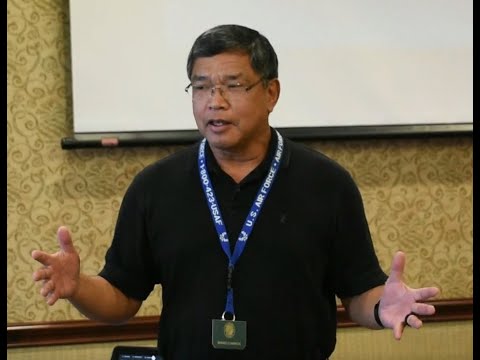
One of the original members of the FASF, Colonel Alan Fisher (Left) has just been a featured graduate in the Air Force Academy Alumni Magazine.
From the very beginning of the FASF, in 2007, Col. Fisherhas rarely missed a major FASF event, making a record as one of our most active members. Alan is an extraordinarily busy resident of Las Cruces, NM, where he works full-time running the family Pecan Orchard and Farm with his wife, Melissa, As if that weren’t enough to keep him fully occupied, Alan has also been a long-time active member of the local CIVIL AIR PATROL (CAP) Squadron 024, stationed at the Las Cruces municipal Airport. where is currently the Chief Counter-Drug Officer for the unit, which keeps him regularly airborne flying missions along the New Mexico-Mexican Border. The CAP is an official Auxiliary of the United States Air Force.
In addition to his duties with the CAP, Col. Fisher recently retired as the Captain of the El Paso, TX General Franklin A. Nichols Flight, of which every member is also a member of the FASF.
Here is the Air Force Academy’s Alumni Magazine’s story about Colonel Fisher
To view full-size in your browser: Cick on the below ICON, but in the upper right of the photo.
Saturday afternoon, the 9th of this month, 3 long-time FASF/Daedalians drove out to witness the Graduation Ceremonies for 9 young new USAF F-16 Viper Fighter Pilots. All graduates were from the 8th Fighter Squadron, informally and affectionately known as the Black Sheep Squadron. Of the 9 class graduates, one was a female fighter pilot. The 8th is one of the three Fighter Training Squadrons that belong to the 54th Fighter Group, whose Commander was at the same dining table at the Holloman AFB Club as the Daedalians. The following photos show the event. The Guest speaker was a retired Brigadier General, Joseph “Magoo” McFall, also a F-16 VIPER pilot, who entertained the graduates, staff, and guests with some wild flying stories from his colorful past.
Col. Mario Campos
Here (L) is long-time FASF member and FAS contributor, Colonel Mario Campos. Following is Mario’s description of General Joseph “McGoo”McFall’spresentation to the Black Sheep Squadron Graduates, their families, guests, and assembled staff:
The members of the El Paso, TX Daedalian Flight 24 were privileged to be invited as guests of the 8th Fighter Squadron for the graduation of new F-16 Fighter Pilots from Class 22- EBH, Holloman AFB, New Mexico.
“Flight members, Mario Campos, Alan Fisher, and Ric Lambart attended and presented the Daedalian‘Major Gen Franklin A. Nichols’ Leadership Award to Captain Michael “Full” Shaw. Captain Shaw’snext assignment is in the Far East.
The evening’s guest speaker was Brig. Gen. (Ret), Joseph D. “Magoo” McFall. An experienced Viper Pilot, Gen. McFall finished his career as Senior Military Advisor to the Assistant Secretary of State, Bureau of Political-Military Affairs. Extraordinarily, if not uniquely, for a Flag Officer, Gen. McFallcontinues to serve the F-16 community as a contract VIPER instructor at Holloman AFB.
During his address, Gen McFall gave four main points:
Know Yourself;
Appreciate Others;
Be Happy;
Be Human.
As he went through his speech, Gen McFall gave a thoughtful personal story to reinforce the importance of each point. All of them revolved around not only competency, but also around leadership and treating others with the same respect one would expect for themselves. He further relayed how each of these points affected him in both peacetime and in combat.
The members of the 24th Flight wish Capt. Shaw (below photos) and all the new Fighter Pilots of Class 22-EBH only the greatest of success in their new assignments and careers. Also, many thanks to Capt. Brett Bultsma (seen in the below photos), an 8th FS Instructor Pilot, for his outstanding work as graduation project officer and for all the assistance he provided to Daedalian Flight 24.“
The Graduates were: 1st Lt. Emna “ZONA” Bonner, Capt. Daniel “DAS” Boutillier, Capt. Daniel “KATS” Katuzienski, 1st Lt. Scott “HOBBLE” Aauritsen, 1st Lt. Drake “Sir Francis” Martin, 1st Lt. Seth “NOTSO” Sharpe, Captain Michael “FULL” Shaw, 1st Lt. Zachary “TONE” Siffler and 1st Lt. Ryan “DIBS” Woodall. You’ll see each of them in the following photo further down this page. To see any photo in its full hi-definition, just click on it. You are welcome and free to download any photos you’d like.
The assembled dining hall was filled with family and special guests, as well as the Holloman Air Force Base personnel who played a vital role in the graduates’ advanced Fighter Pilot Training Experience. The Daedalians award the graduating Class’s top Leader, with the unique Daedalian Leadership Award.
Again, this class’s top Leadership Award was given to Captain Michael “FULL” Shaw. The Project Officer for the event was Captain Brett “MULLIGAN” Bultsma, a decorated Fighter Pilot and one of the Squadron’s Instructors, all of whom have actual battle experience. The renowned F-16 Viper has been a first-line Fighter in the USAF for more years than the age of every one of the new graduate pilots.
L to R: Lt. Col. Alan Fisher, Project Officer Capt. Brett Bultsma, and Colonel Mario Campos.
L to R: Captain Bultsma grins at Daedalian, Ric Lambart’s old-timer Air Force ramblings.
Col. Alan Fisher, 8th FS Project Officer, Captain Brett Bultsman, and Colonel Mario Campos.
Capt. Brett Bultsma, Graduation Project Officer, explains the roots of his call sign, “Mulligan.”(This is a 50-second video clip. You can see it full-screen by using the “full” size icon)
L to R: Capt. Brett Bultsma and Lt. Colonel Matthew “Poison” Marshall, the 8th’s Commander
Col. Camposchatting with 54th Fighter Group CO, Col. Samuel Stitt, III& his wife, Meghan
L to R: Colonel “Tweak” Stitt, Meghan Stitt, Cols Alan Fisher & Mario Campos, Daedalians
L to R: Col. Samuel Sitt, Meghan Stitt, Chief MSNathan Chrestensen, & Colonel Alan Fisher
Colonel Stitt describes a flight experience he had with the usual hangar talk gestures . . .
MajorDonald “Sizzle” Lodge-Maragh at the Podium, as Captain Brett Bultsma looks on.
Colonel Matthew “POISON” Marshall, CO of the 8th Fighter Squadron addresses the audience
General (Retired) Joseph “McGoo” McFallspeaks to the class and guests about his days on active duty as an Air Force Fighter Pilot. The General has over 2,800 hours, 795 of which were in combat while piloting the F-16 Viper, the same aircraft flown by this class’ new graduates.
Longtime FASF member and Daedalian El Paso, Texas Flight 24 Commander, Colonel Mario Campos, Congratulates Captain Michael “FULL” Shaw,who won the coveted Daedalian Leadership award.
L to R, All 9 graduates of “The Black Sheep” 8th Fighter Squadron Class 22-EBH: Capt Daniel “DAS” Boutillier, 1Lt Drake “Sir Francis” Martin, Capt Michael “Full” Shaw, 1Lt Emma “Zona” Bonner, 1Lt Scott “Hobble” Lauritsen, 1Lt Seth “NOTSO” Sharpe, 1Lt Zachary “Tone” Stiffler, Capt Daniel “KATS” Katuzienski,and 1Lt Ryan “DIBS” Woodall.Colonel Campos chats with top-class LEADER, Captain “FULL” Shaw, about his USAF career. Colonels Mario Campos and Alan Fisher proudly flank top award winner, Capt. Michael ShawCaptain Michael “FULL” Shaw listens to Colonel Fisherdescribe some of his USAF experiences
The annual remembrance ceremony was held yesterday in downtown Columbus under the auspices of the Columbus Historical Society (CHS) and within their dedicated memorial park behind their well-known “Depot Museum.”
CHS President, Shirley Garber lead the ceremony which featured Professor Brandon Morgan,whose presentation was entitled: “Protector and Aggressor: Pancho Villa’s Complicated Relationship with the Lower Mimbres Valley.“
Visitors came from as far as Kansas, Washington (state), and several from El Paso, Texas, as well.
The CHS always holds its service on the exact date of the tragic raid, regardless of which day of the week on which that date falls, whereas Columbus itself, holds their Raid Day events over the closest weekend to that date of March 9, 1916, assuring working families can make the occasion. Next year, in 2024, the date of the actual raid will fall on a Saturday, which will mean the attendees will number in at least the hundreds.
Yesterday’s turnout was estimated to be just short of 60 people. This weekend the renowned “Cabalgata Binacional,” traditionally witnesses a large group of Horsemen and women coming up from Mexico to meet with hundreds of horsemen and women from the states. It’s an across-the-border celebration less of the raid, and more about the kinship and closeness of the sister nations. As in recent years past, the large public event is directed by its principal organizer and promoter, Norma Gomez, who is the landlord for the FASF headquarters Office in Columbus. The celebratory occasion is usually attended by several thousand celebrants.
The following photos are of yesterday’s Memorial Service:
Richardand Elizabeth Pendleton in the foreground speaking with John Tyo
L to R: Allen Rosenberg(an ex-Marine!), in a 1916 Army uniform, joking with Corby Burns, and Patricia Kiddney
CHS Officers and distinguished guests on the Gazebo for the Ceremony – with Professor Brandon Morganat Podium
Audience gathering in readiness to hear the program
After the ceremony concluded, Steven Zobeck (L) and Dr. Kathleen Martin (R) look on as Dr. Morgan shakes hands with Pancho Villa look-alike re-enactor, Rafael Celestino
L to R: Rafael Celestino, Patricia Kiddney, Head Columbus Librarian, Maria Constantine, and Columbus C of C Director,Norma Gomezpose with Darrel Nash (R), Historian for the famed Buffalo Soldiersof the Punitive Expedition – Normahad just presented the Environmental Book Chihuahua to the Library, courtesy of the Mexican Government.
L to R: Maria Constantineand Norma Gomezdiscuss the Buffalo Soldiers museum and the soldiers’ organization with Darrel Nash
On October 6, Colonel Mario Campos, (L) USAF Retired, past Flight Captain of the General Nichols Flight of the Daedalians in nearby El Paso, briefed his fellow aviators about the last 75-year history of small arms weapons and their legacy in the Air Force. After his PowerPoint-supported talk, his audience agreed they learned things they never knew, even when on active duty. Remember to simply click on any photo below to see it in full resolution and full size. 2 short videos (A brief 1:00 minute long highlight, and a 10-min. cut of his one-hour presentation, follow below the still photographs.
Col. Bob Pitt, right above, helps the Service Staff plan the upcoming luncheon. His wife, Julie is 2nd from Left.
L to R: Pete Brandon, Virg Hemphill, Jerry Dixon, and Roger Springstead, look over the Ft. Bliss Club’s menus.
L to R: Pete Brandonshows Virg Hemphill some photos on his phone.
Retired Naval Aviator, Roger Springstead, Flight 24’s Chaplain, intently listens to Virg Hemphill and Jerry Dixon.
L to R: Col. Melissa Fisherand her husband, Col. Alan Fisher, look over some photos of Col. Campos’.
Flight 24’s Captain, Col. Alan Fisher, opens the luncheon meeting.
L to R – foreground: Judy Campos chats with her husband, Col. Mario Campos. At the rear, in green and black, is Daedalian Army Aviator widow, Connie Sullivan.
The scheduled speaker for this Luncheon was canceled, so Colonel Mario Camposstepped in with his PowerPoint Presentation about the history of Air Force small arms, entitled, “75 years of USAF Small Arms.”
The following description of the presentation was written by Colonel Bob Pitt.
Mario began by pointing out that while the Air Force has a rich and well-documented history of its major weapon systems since its birth in 1947, little has been written on the small arms the Air Force has used during that period. He also pointed out that the Air Force has been instrumental in the acquisition of small arms that have had an impact on all the other services. He limited the discussion to personal arms and excluded crew-employed machine guns, light machine guns, mortars, handheld rockets, and so on.
He described the period of 1947-1956 which included the transition of the Army to Air Force small arms. He went over the history of the M1 Carbine and the Colt M1911A1 as the primary weapons adopted by the Army during this period. He also covered the M1 Garand, but primarily of its use as an Air Force competition and ceremonial weapon.
Mario then transitioned to the 1956-1990 period by highlighting some unique firearms like the .22 Hornet M4 and .22/.410 M6 Survival rifles. He then went on to give the history of the Air Force’s transition to the Smith and Wesson “Combat Masterpiece” .38 Special and the Snub-Nosed .38 Special as the Air Force’s primary handguns for Security Forces (Police) – and Aircrews.
Colonel Campos then described the Air Force’s role in acquiring one of the legendary battle rifles still in use today . . . the M16. He described how Gen Curtis LeMay was the first of the service chiefs to recognize the value of the weapon and, after being initially rebuffed, it was the Secretary of Defense, Robert McNamara, who ordered all services to use the M-16.
Mario also went through the different Air Force versions including the Colt Model 604 (M-16) and the XM177E GAU-5 (M-16 Carbine). He also went over the Air Force’s continuing use of the Remington 870 Shotgun.
Finally, Mario transitioned to 1990 and beyond when the Air Force adopted the M-16A2, Beretta M9 pistol, M4 Carbine, M24 Sniper System, M11 pistol, and now the Sig Sauer M18 pistol and the HK 417 Designated Marksman Rifle. He ended the presentation with a description of the new Aircrew Survival Weapon, a foldable M4 Carbine that fits in aircrew survival seat kits.
Here, below, are a short video (1 minute) highlight of Colonel Campos’ hour-long presentation, and a 10-minute version. Please excuse the problem with the variation in the lighting in some sections.
“Full-screen” mode won’t work on the first video clip, but it will on the YouTube version.
Ken William Emerywas an early member of the FASF Board of Trustees and its official local Columbus, Historian.
The FASF has just learned that Ken died this past Wednesday, the 9th of February, at his Columbus, New Mexico home. He was 87.
Before retiring, Ken was a Cultural Resource Research Archaeologist. His avocation was US History.
Accordingly, he almost naturally spent countless hours thoroughly researching the operations of the US Army’s First Aero Squadron (FAS) during its campaign out of Columbus – and of its 11 young pilots’ lives.
By the time he had completed his studies, it was if Ken had become one of their closest friends, insofar as he knew so much detail about each of their lives . . . both in and out of the Army Signal Corps’ Air Service.
After retiring from Archeology, Ken and his wife, Sheila, regularly spent their summers living full-time in the Arizona wilderness near the old mining town of Globe, where they spent each day of the fire season manning a fire watch-tower in the Tonto National Forest for the USDA’s Forest Service. The couple had met while fellow undergraduate students at New Hampshire’s Plymouth State University. They also lived and worked in Syracuse, NY.
Sheila’s mother, Marjorie Thompson, had been an early American aviation pioneer and was a professional flight instructor before and during WWII. Sheilapassed away in 2020.
Ken was always actively volunteering and helping in Columbus Village affairs and served on the Village Historic Preservation Commission. In addition to contributing articles to the First Aero Squadron’s early newsletter, the AERODROME, Kenalso wrote stories for the New Mexico Desert Exposure monthly publication. Ken had completed all his post-graduate work in Archeology and only needed his oral exam to obtain his Ph.D. However, and typical of Ken,his love of the outdoors was so great, that instead of becoming a full-time academic, he chose to work for the US Forest Service.
The following is most of the surviving video (15 min) clip of Ken addressing the October 2014 Annual Convention of the League of WWI Aviation Historians at Monterrey, CA in which he described the exploits of the small handful of early US Army aviators that manned the indomitable Curtiss Jenny biplanes in a combat enterprise that lead directly to the development of the world’s greatest Airpower some 30 years later, during WWII.
Kenis survived by four grown children: Peter Emery of Farmington, NM; Holly Emery of San Jose, CA; Sasha Duffy of Santa FE, NM; and Andrew “Drew” Emery of Roslyn, WA. Kenand Sheilahad 7 grandchildren, and 12 great-grandchildren.
*Photo courtesy of long-time FASF member, FASF Photographer,Dave Clemmer.
The below video clip is 15 minutes long. It shows Kenaddressing the Annual Convention of the League of WWI Aviation Historians in Monterrey CA in 2009.
An early member of the FASF, Charlie Overstreet, took his final flight two weeks ago from his home in El Paso, Texas. He was also an active member of the El Paso Daedalian Flight 24 and one of its former Captains. Charlie, over the past ten years, has also been one of our FASF Aviation News Reporters. He was a long-time docent at Santa Teresa’s, New Mexico’s War Eagles Air Museum (WEAM), and was an active member of its Board of Directors. Both the Daedalians, the WEAM, and the FASF will sorely miss Charlie’s positive personality and his incessant “can do” spirit. Here, below, is his Daedalian Flight’s Memorial headline honoring his long service (his wife of 61 years, Mayre Sue, is at the far right with Charlie at a Daedalian gathering):
Charles “Charlie” Overstreet passed away on February 3, 2022. He was born in 1937 to Charlesand Zelma Overstreet.Charlie’sdad was a Coast Guard officer and his earliest memories were of being at Coast Guard Air Stations all around the country, watching airplanes with his dad and younger brother Lane Overstreet. This inspired a lifelong passion for aviation and patriotism.
Upon graduation from the University of Miami, Where he was a member of the AFROTC unit, Charlie was commissioned a 2nd Lieutenant in the USAF.
He entered pilot training at Big Spring, Texas where he met his future wife Mayre Sue. They married in the summer of 1961 when he finished B-47 Stratojet bomber training and was assigned to Forbes AFB, Kansas. While in Kansas, Charlie and Mayre Sue had two sons. The oldest Charles Overstreet was born in the middle of the Cuban Missile Crises, Charlie had to take a couple of hours off a nuclear alert to be at the hospital. James Overstreet was born just before his dad left for B-52 Stratofortess bomber combat crew transition training at Castle AFB, California. In 1969 Charlieand his B-52 combat crew joined the conflict in Vietnam, where he flew 55 combat missions during Operation ArcLight. Upon returning from South East Asia, Charlie left active duty with the USAF.
In 1971 the US Customs Service Sky Marshal program hired Charlie and in 1972 he was promoted to a Special Agent/Pilot position in San Antonio, TX. He transferred to DEA in 1973 as one of the initial stand-up cadre. Within a couple of years, he helped stand up the air branch supporting sensitive counter narcotics’ operation, sometimes doing things with airplanes that are generally frowned upon today.
In 1985 he transferred to El Paso, retiring from DEA in 1994. Refusing to slow down, for 17 years Charlietaught as a substitute teacher at Coronado High School. After retiring from teaching Charlie became a volunteer at the War Eagles Air Museum, he just loved being around airplanes. Charlie enjoyed working with his colleagues on the War Eagle museum staff and as a docent for visiting students.
One of his most recent and passionate endeavors was honoring our Texas and New Mexico veterans through the organization and development of the Santa Teresa Veterans Memorial Park in Santa Teresa, New Mexico. He enjoyed hunting, skeet/trap shooting, cigars, and traveling around the world with his family and friends. Charlie was a member of Safari Club International, The Order of the Daedalians, and the FASF.
Charlie2nd from Right with his fellow Daedalians (L to R) Roger Nichols, Bob Pitt, Ric Lambart, and at far right, Mario Campos, all at Holloman AFB (HAFB), NM.
Charlieintroduces WEAM CEO, Mike Epp at Daedalian Meeting just this past November 3, 2021
Charlie at Daedalian Meeting Podium this past November 2021
Charlie at Daedalian luncheon table with his wife, Marye Sue, and Colonel Alan Fisher at left.
Services were held at Martin Funeral Home, in El Paso, yesterday (Monday), February 14,2022.
In lieu of flowers, memorial donations for Charlie may be made to the Veterans Project-Santa Teresa Charitable Foundation, 2660 Airport Road #780, Santa Teresa NM 88008. We already miss you, Charlie.
Thursday, October 7th, FAS Airfield Volunteer, Gordon Taylor, celebrated his 80th birthday at the Columbus Library in downtown Columbus. Gordon is one of the town’s volunteer fixtures, so the party held in honor of his birthday was well attended, as locals dropped by throughout the morning to pay their respects – – – and to enjoy the cake and other celebratory treats.
That of course meant that other FASF volunteers and old-timers were also part of the well-wishing group of Gordon’sfriends. Pictured below are several of them, who were there at the time your webmaster dropped by to shake the birthday boy’s hand – – – and snap some photos.
Mr. Taylor is currently the President of the Columbus Library Board of Directors and an accomplished commercial photographer, designer and artist. He is a long-time resident of the Columbus suburb, City of the Sun.
Columbus Librarian, Maria Constantine Ehlers, invites one and all to enjoy the many offerings of the library, which regularly holds events at which local artists (Columbus has long been an artist’s haven) both show and sell their creations. She reports that Gordon is now in the process of creating a book of his photographic work for publication. Incidentally, don’t forget that the Library has been a long-time supporter of the FASF, and is listed under its Local Business Supporters right here.
To see any of the below photos in full resolution, simply click on it.
FASF Volunteer, Gordon Taylor Turns 80
L to R: Local sculptor Tarás Mychalewychhas jovial conversation with longtime FASF member, Mayor Bruce Salas
Jeane Canfield, one of the FASF’s founders, celebrates with Steve Zobeck, dual Columbus – Michigan citizen.
Long-time FASF member, John “Cabi” Cabigas, (at Left) flew the famous BBC Commentator, James May, into Space in the First Aero’s Dragon Lady, and did it at the First Aero Squadron’s current location at Beale Air Force Base (BAFB)North of Sacramento, CA. Of course Cabiconducted that great space adventure while still on active duty with the USAF as one of the famed Lockheed U-2 Dragon Lady Instructor Pilots. Here is a short 30 minute summary of that memorable flight’s full documentary, which had, as its central figure, TV Journalist, James May, Most of the full-length documentary was made by the BBC, but some was shot by the USAF.
Here, below, is another flight aboard the Dragon Lady, but without either Cabi or James May. It is only :10 minutes long, but the resolution of the video is higher. But if you’d like to see both Cabi and James May, you’ll only see them in the first video above. In the meantime, Cabiadvises that Amazon Prime has the full documentary in high resolution, should you be able to view that version:
If you click right here, you will get chance to witness Cabiagain, as your webmaster interviews him, along with his fellow Dragon Lady Instructor Pilot, Bill Williams. Both gentlemen were video-taped at the 100th Anniversary of the First Aero Squadron’s birth, held at Beale AFB, CA.
Cabi lives nearby the Air Force base and keeps himself busy flying his own classic 1940 J3 Cub, which has a mighty 65HP engine to help it race aloft. Your reporter soloed in one of them – sans brakes and tail wheel – back in 1944. Since retiring from active duty in 2010, Cabihas remained an active member of his local chapter of the EAA and belongs to other aviation groups, as well.
When he graduated from San Jose State University in the AFROTC, he had also gained his FAA Certification as an A&P mechanic! That in and of itself was quite an unusual accomplishment.
Major Cabigas’USAF Pilot career spanned just shy of a quarter century, and involved 18 years of working with the Dragon Lady. He holds a FAA Certified Flight instructor (CFI) Rating along with both a Commercial and Airline Transport Pilot License. His activities with the EAA are largely motivated by his interest in sharing his love of aviation with the many Young Eagles who are lucky enough to get an airplane ride with this accomplished Air force Pilot, an American military aviator who was actually born in the Philippines!
But, thanks to long-time FASF member and retired United Air Lines Captain, Nancy Aldrich, a loyal Texan, and regular aviation author, we have this fascinating and little-known story of how an East Texas refinery – and one of its sharper engineers, Tim Palucka – helped change the war’s outcome – in our favor – by his use of an obscure French patent on gasoline refining.
Without further ado, here’s the tale:
87 Octane Aviation Gasoline vs 100 130 Octane Aviation Gasoline in WWII
(This is a declassified article by the British Society of Chemists (Declassified in 2014) )
“It has always puzzled me as to why the German Luftwaffe kept on using 87 Octane Aviation Gasoline while the Americans and British used 100 Octane Gasoline in their Spitfire Fighters and Americans used 130 Octane in our P-51 and other fighters. (see both aircraft below)
P-51 Mustang leads Spitfire in close formation flight
This morning I discovered the reason!
It seems that the German and British aircraft both used 87 Octane Gasoline in the first two years of the war. While that was fairly satisfactory in the German Daimler-Benz V-12 engine, It was marginal in the British Rolls-Royce Merlin XX engine in British aircraft. It fouled the spark-plugs, caused valves to stick, And made frequent engine repair problems.
P-51 Fighter in Flight
Then came lend-lease, and American aircraft began to enter British service in great numbers. If British engines hated 87 Octane gasoline, American, General Motors Built, Allison 1710 engines loathed and despised it.
ME 109 Messerschmitts escorting Nazi Heinkel Bombers
B-17E Flying Fortress
SUNOCO officials pour the billionth gallon of high octane aviation fuel produced during world war II
Something had to be done!
Along came an American named Tim Palucka, a chemist for Sun Oil (SUNOCO) in their South East Texas Refinery.
Never heard of him? Small wonder, very few people have. He took a French formula for enhancing the octane of Gasoline, and invented the “Cracking Tower” and produced 100 octane aviation Gasoline.
This discovery led to great joy among our English Cousins and great distress among the Germans. A Spitfire fueled with 100 Octane gasoline was 34 miles per hour faster at 10,000 feet.
The need to replace engines went from every 500 hours of operation to every 1,000 hours. Which reduced the cost of British aircraft by 300 Pounds Sterling. Even more, when used in 4 engine bombers.
The Germans couldn’t believe it when Spitfires that couldn’t catch them a year ago started shooting their ME-109 E and G models right out of the sky.
Of course, the matter had to be kept secret. If the Germans found out that it was a French Invention, They’d simply copy the original French patents. If any of you have ever wondered what they were doing in that 3 story white brick building in front of the Sun Oil Refinery on Old Highway 90, that was it.
They were re-inventing gasoline.
The American Allison engines improved remarkably with 100 Octane gasoline but did much better when 130 octane gasoline came along in 1944. The 130 Octane also improved the Radial Engined Bombers we produced.
The Germans and Japanese never snapped to the fact that we had re-invented gasoline. Neither did our “Friends” the Russians.
100,000 Americans died in the skies over Europe. Lord only knows what that number would have been without “Super-Gasoline”. And it all was invented just a few miles west of Beaumont, and we never knew a thing about it.”
Aha – – – but there’s much more to this story than just recited above. In 1935, 6 years before Pearl Harbor and his country’s entry into WWII, Jimmy Doolittle, had retired from the Army and was working for the Shell Oil Company. He saw the need for a higher octane fuel if we should enter another war. So, click here, for more on the important role he played in the fuel octane race, which is not mentioned in the opening story above.
Thanks to dear and close friend of Jim’s, Dave Clemmer, also an early member of the FASF, we now have this new moving special Tribute to Jim.
Daveattended Jim’sfuneral, too, of which he’s included some of the photographs in which he captured Jim’sfriends and family.
Simply click on the following photo of Jim, to enjoy a nostalgic photo-journey through much of Jim’smemorably accomplished life. If it weren’t for Dave’sphotographic collection, we’d have come up all too short of photographs of Jim, if for no other reason but that Jim was usually to be found behind, rather than in front of the cameras.
Make sure to have your speakers turned on because Dave musically scored this special Tribute.
Thanks again to Dave for the fine Tribute to Jim and for also supplying a number of photographs taken of Jim that we’d not seen before. Below is one taken of Jim while a young man on active duty with the Air Force during the Korean War.